11 July 2025
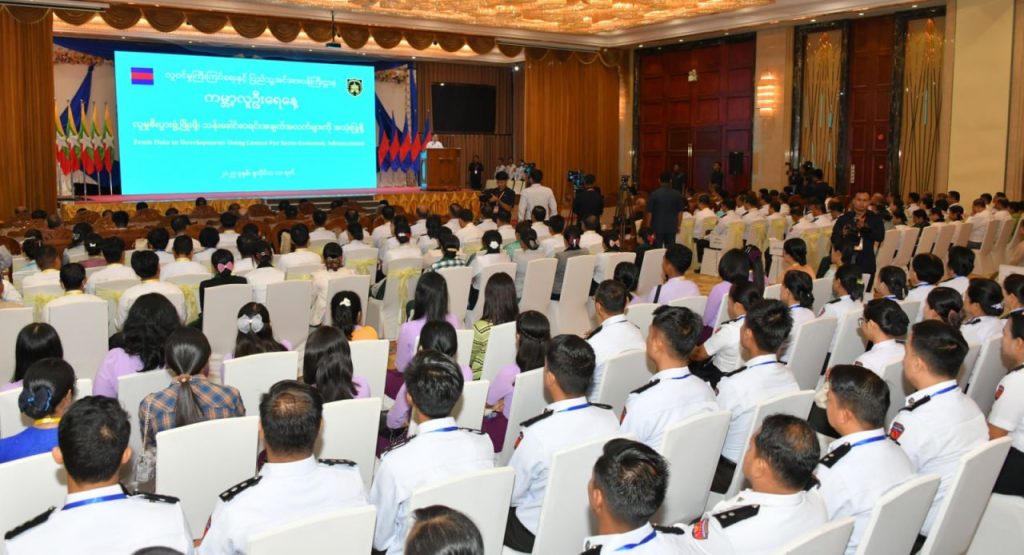
Patron of the Central Census Commission Vice Chairman of the State Administration Council Deputy Prime Minister Vice-Senior General Soe Win delivered a speech at the ceremony to mark the World Population Day 2025 at Mingala Thiri Hotel in Nay Pyi Taw this morning.
Also, present at the ceremony were SAC members, Union ministers, the Nay Pyi Taw Council Chairman, deputy ministers, departmental heads, Ambassadors and diplomats from embassies based in Myanmar, officials from the ceremony organizing central committee and subcommittees, ministries and associations as well as guests.
First, Patron of the Central Census Commission the Vice-Senior General said that the United Nations designated 11 July 1987 the year the world population reached five billion as World Population Day. The day aims to raise awareness about global population issues and their impacts on society, development, and the environment. Member countries have since observed World Population Day annually. In the case of Myanmar, the country has been commemorating this day since 1990, making this year the 36th Anniversary of its observance.
If we look at the population changes in Myanmar, according to the 2014 census, the population was over 51.4 million, and it was estimated that by 2024, the population would reach around 56.2 million. However, based on the preliminary figures from the 2024 census, it has been found that the current population is only just over 51.3 million.
Although population growth was expected based on previous growth rates, data from the 2024 census shows there has been no population increase over the past 10 years. Therefore, it is necessary to closely examine the factors that directly affect population growth such as birth rates, death rates, and migration rates.
According to the 1983 census in Myanmar, the average number of children born to a woman was 4.7. However, by the 2014 census, this figure had dropped to around 2.3 children, and according to the 2019 interim census, it had further declined to below 2.1 children—the level required to replace both parents. This shows that the country’s birth rate has been steadily declining, and it is likely to decrease even further. If the average number of children born to a woman falls below 2, the country’s population will gradually and noticeably begin to decline.
In Myanmar, the severe CO-VID-19 pandemic that occurred around 2020, along with the outbreaks of violence following 2021 and various natural disasters, had significant impacts on birth and death rates. Additionally, employment opportunities declined, and a large number of young people increasingly migrated abroad.
In developing countries, as the elderly population increases, better job opportunities and growing labor market demands have led to increased labor migration. Therefore, in Myanmar as well, alongside a declining population, it is important to carefully manage migration to prevent the loss of human resources and to ensure that the country’s productive capacity remains unaffected.
According to projections by population experts, in the near future, the number of elderly people aged 65 and above in developing countries, including Myanmar, will surpass the number of children. At that time, it will be necessary to create opportunities for lifelong learn-ing and retraining, as well as to develop a workforce capable of working across various age groups. Therefore, relevant ministries should begin preparing long-term plans now to create job opportunities in the private sector for older individuals who are still willing and able to work.
In order to study and analyze the population changes in the country and to obtain demographic and socio-economic data, the State Administration Council has made necessary arrangements to conduct the Population and Housing Census without fail.
To determine the population that can be used as a basis for short- and long-term national planning, to study and analyze population change processes, and to obtain essential data for examining and promoting national development, the Population and Housing Census was successfully conducted in October 2024. The data collected from the census provides a snapshot of the current situation of national development and will support accurate policy-making, strategic planning, and programme design. Moreover, this information is essential for resource allocation, budget distribution, and for building necessary infrastructure such as schools, hospitals, healthcare facilities, roads, and bridges. It is also crucial for providing care services for the disabled and elderly, creating employment opportunities, and implementing other vital management activities.
Therefore, it is necessary to thoroughly analyze and study the data from the 2024 census. The 2024 census included a total of 68 questions, covering not only demographic data but also socio-economic information, domestic and international migration details, and comprehensive data on households and families. These findings must be carefully examined to reassess the current state of our country. The census data, which reflects the nation’s present conditions, should be a key resource in the country’s development processes.
Additionally, our country will soon hold a free and fair multi-party democratic general election. To ensure that the rights of all eligible voters are protected and that the election is con-ducted successfully with proper methodology, the accurate voter lists derived from the 2024 census population data will play a crucial supporting role.
Furthermore, the 2024 census data will be highly valuable for rescue and reconstruction efforts in the cities affected by the recent major earthquake in Mandalay.
Every year on World Population Day, member states of the United Nations set a theme and organize ceremonies and activities. For Myanmar’s 2025 World Population Day, the theme has been chosen to reflect the country’s current situation and effectively utilize census data: “From Data to Development: Using Census for Socio-Economic Advancement”.
This theme was selected be-cause census data is extremely valuable for national develop-ment. The census was conduct-ed using the country’s own human and financial resources, without foreign assistance, and involved extensive preparation and manpower. Numerous challenges surfaced during the data collection process, those who dedicated themselves to this task at risk of their lives are commendable.
Given the significant financial and human resources invested to successfully carry out the census, policymakers, planners, and data users must prioritize the effective use of this data for national development and the socio-economic progress of the people.
Starting today, on World Population Day, may all citizens of Myanmar live in health and prosperity, free from natural disasters, and contribute to the greater good. May the population and household census data be effectively utilized across sectors to advance socioeconomic development.
Following this, Union Minister for Immigration and Population U Myint Kyaing explain-ed the theme, From Data to Development: Using Census for Socio-Economic Advancement”. Subsequently, an animation clip commemorating the 2025 World Population Day was shown.
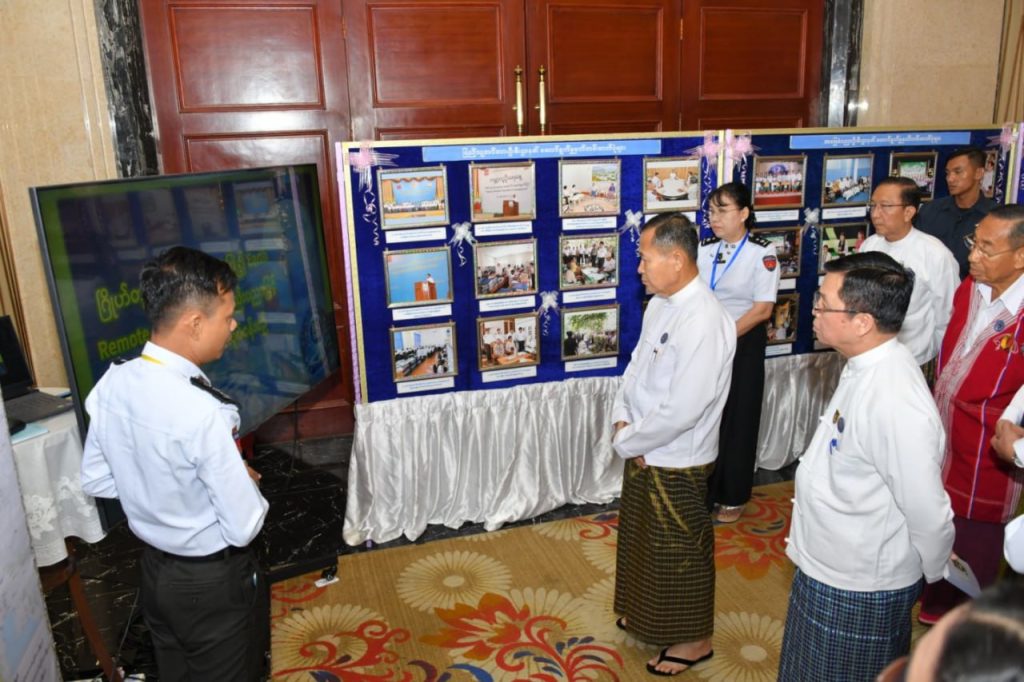
Later, Vice-Senior General Soe Win posed for commemorative photos with attendees and toured the exhibition show-casing materials for the 2025 World Population Day, where officials provided explanations